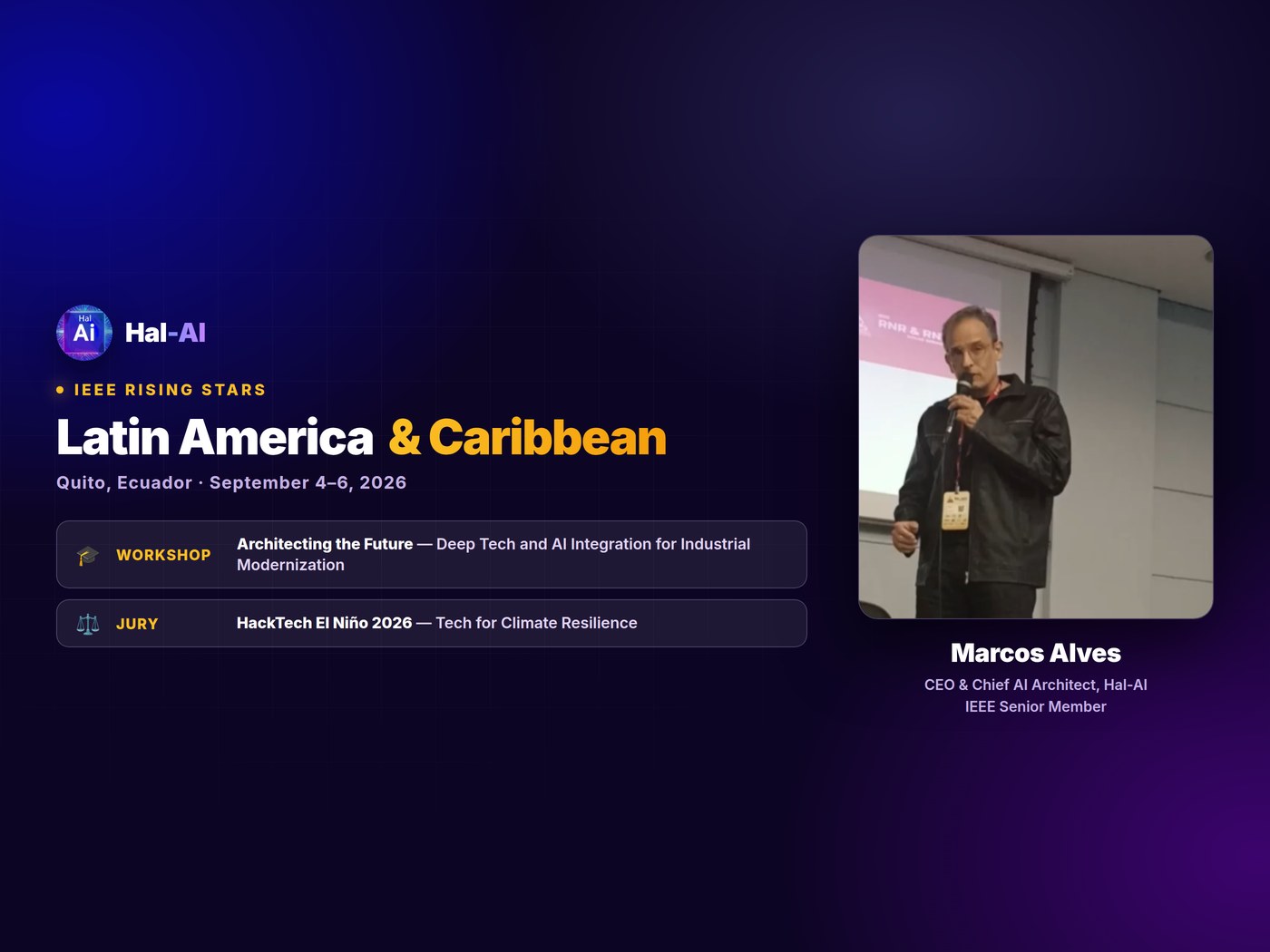
IEEE Region 9 has invited Hal-AI's founder and CEO into two roles at Rising Stars Latin America and Caribbean 2026, which opens this Friday in Quito: running a technical workshop on AI system architecture, and taking a seat on the HackTech El Niño jury.
IEEE Rising Stars Latin America and Caribbean 2026 runs from September 4 to 6, 2026, at the Go Quito Hotel, in Quito, Ecuador, under the theme "Engineering Leadership for a Changing World". It is the IEEE Region 9 conference for young engineering professionals and students from across Latin America and the Caribbean, organised with IEEE Members and Geographic Activities (MGA), and it covers artificial intelligence, autonomous systems, cybersecurity, power and sustainability, IoT, space and manufacturing.
Hal-AI's schedule in Quito has two sides: teaching how the architecture is built, then sitting on the other side of the table to assess the people who built it.
The workshop: architecture, not showcase
The session led by Marcos Alves is titled "Architecting the Future: Deep Tech and AI Integration for Industrial Modernization". By the description IEEE published, it is an intensive technical workshop on the architecture and real deployment of advanced artificial intelligence systems in complex enterprise and healthcare ecosystems — deliberately beyond surface-level AI applications.
Participants will work through designing scalable AI frameworks, integrating complex multimodal models and overcoming the computational bottlenecks of modern automation. The material draws on real deployments in the medical and telecommunications sectors, aiming to give emerging engineering leaders the technical blueprints and the mindset needed to lead the next wave of industrial modernisation in the region.
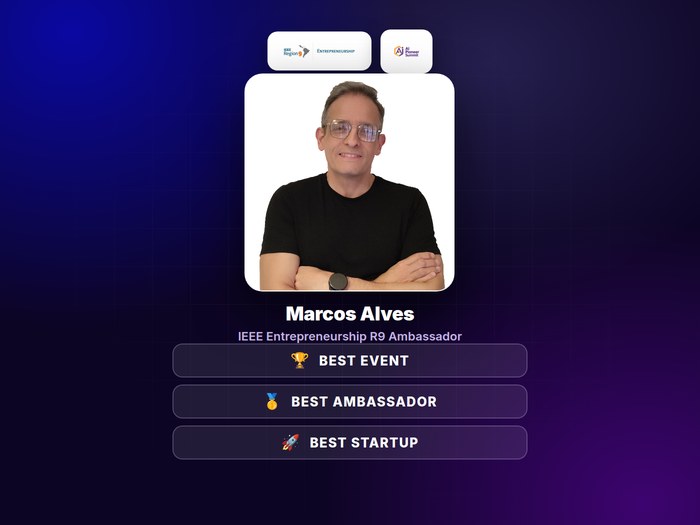
On the event page, IEEE introduces Alves as CEO and Chief AI Architect of Hal-AI, with more than 30 years of deep tech engineering — a career that began building Brazil's first large-scale Computer Telephony Integration (CTI) systems. The profile also records his sweep of the 2025 IEEE Entrepreneurship Region 9 awards, with first place for Best Ambassador, Best Event and Best Startup.
The jury: HackTech El Niño 2026
The second role is at HackTech El Niño 2026 — Tech for Climate Resilience, the hackathon running in hybrid format from August 28 to September 5 within Rising Stars, organised by the IEEE Ecuador technical chapters and strategic partners. Teams are challenged to take on climate-related humanitarian problems in the Andean region: disaster monitoring, public health, agricultural resilience and emergency communications.
Marcos Alves is one of the five judges on the multidisciplinary panel covering technology, innovation and sustainability. Final assessment takes place on Saturday, September 5: team mentoring from 10:30 a.m. to 1 p.m., submissions closing at 1 p.m., pitches and final evaluation from 2 p.m. to 4 p.m., and the awards at 7 p.m.
Each team gets three minutes to present. Solutions are scored out of 100 points, split across innovation, value proposition and sustainability, feasibility and scalability, progress of the solution, and how well the project is communicated. The top three teams are awarded.
Why Hal-AI is going
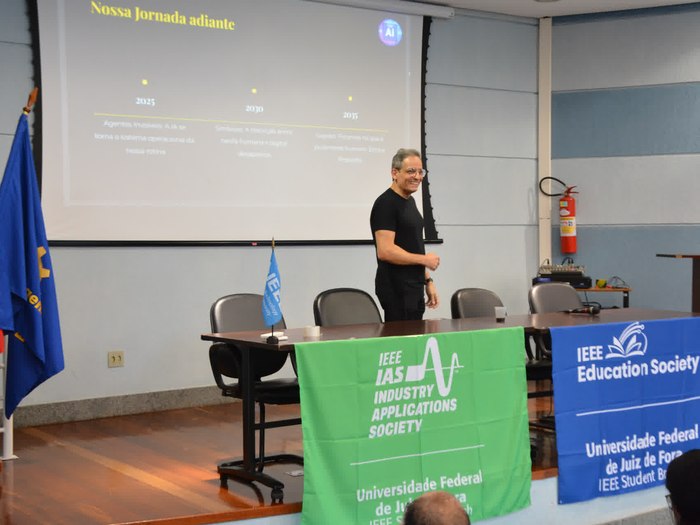
This is the third time in twelve months the company has been called into this role. Hal-AI organised and sponsored the IEEE AI Pioneer Summit, named the best event of 2025 in Latin America and the Caribbean, and was a gold sponsor and speaker at ENTENSE 2026, run by the IEEE IAS chapter at UFJF, in May.
The pattern is the same: putting the people who build autonomous agents with memory and context in production in front of those entering engineering — and, in the hackathon's case, assessing at close range what the next generation is building. In Quito, both happen over the same weekend.
The full programme is at r9.ieee.org/risingstars-2026, and the session profile at r9.ieee.org/risingstars-2026/marcos-alves.