Multiple agents on one official number
The same official number can be staffed by several agents, each with its own personality, knowledge base and tools — sales, support, collections, post-sales.
Hal-AI connects your company's official number through the Meta Cloud API and puts autonomous agents to work on text, audio and images — with memory of what has already been discussed, and a clean handoff to a human whenever someone asks for one.
Large companies talk to our sales team. Small businesses activate the virtual employee straight from the landing page.

There is a shortcut for automating WhatsApp outside Meta's rules. It works right up until the day it stops working — and it takes with it the number your company has been publishing for years. Hal-AI is a Meta Business Partner and operates exclusively on the Official WhatsApp Business Cloud API.

This is not a chatbot running a flow. It is an operational agent trained to do the work.
One official number, as many agents as the operation calls for, and a single conversation hub shared by AI and people.
The same official number can be staffed by several agents, each with its own personality, knowledge base and tools — sales, support, collections, post-sales.
Simultaneous conversations never compete for a rep. Everyone gets an answer right away, 24 hours a day, in text, audio and images.
Campaigns created, segmented and tracked on a Kanban board, with per-campaign reporting and contact exports. Details on Campaigns.
Your company authorizes access through Meta's own flow, pending numbers show up on the activation screen and become channels in the platform. Nobody has to write code to get started.
A versioned REST API, authenticated by key, with scopes, pagination and an idempotency key on sends — to deliver messages, manage templates and follow chats from your own system. See Integrations and API.
No cap on your contact base and no cap on campaigns. The CRM keeps the customer record, the history by channel and the tags the AI generates from recent messages.
The agent calls the APIs your company already uses and walks the customer through to payment inside the same conversation, with no channel switching along the way.
The agent does not start over with every message: history is vectorized and stable facts about the customer are retained. This is the subject of the patent filed with the USPTO.
The brain that answers on WhatsApp also answers in your website chat and on the phone, with the same prompt, the same tools and the same memory. See Webchat and voice.
The screen below shows the channel inbox: in the header, the company's official number on the Meta Cloud API and the green badge for a connected channel. On the left is the list of live conversations, with the open one highlighted and an unread counter on the others.
In the center, a retail conversation from start to finish: the customer asks about her order, the agent queries the system through an API, answers with the delivery estimate and leaves a pre-authorized exchange on her record. The footer strip notes that the case was resolved by the agent itself, without reaching a person, and shows which tools it called to get there.
Outside the 24-hour window, Meta only allows a conversation to start from an approved template. The platform handles both ends: building and approving the template, and watching the health of the number while messages go out.
Create templates, submit them for approval, list them and delete them right inside the platform, including the upload of header media.
A watchdog that follows the quality of the number while campaigns are running and acts on its own, according to how serious Meta's response is.
The same agent that talks to the people who buy talks to the person in charge. On one side, customer service. On the other, the business owner asking how the day went — on the same WhatsApp.
This is not a chatbot running a flow. It is an operational agent trained to do the work.
The content depends on how each company configures its agent.
What changes from one sector to the next is not the technology: it is the agent's personality, the knowledge it draws on and the tools it has at hand.
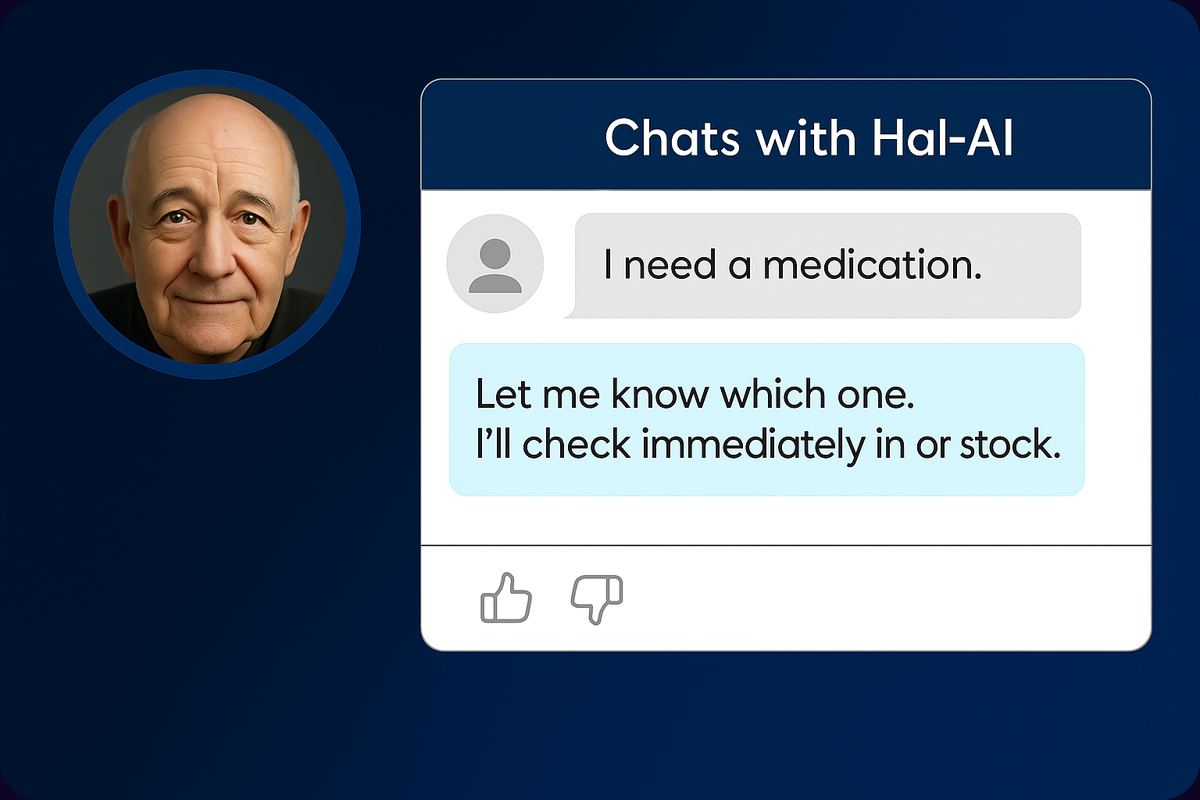
Inventory, orders, customer records, schedules — through the APIs of the systems your company already runs. An endpoint is registered once and becomes a tool the agent can use.
The Knowledge Vault holds PDFs, text and images indexed per agent. That is where procedures, policies and answers that live in no system at all come from.
No customer is ever stuck talking to a machine. When a rep takes the card, the platform pauses the bot in that chat; when the rep closes it, the agent picks the conversation back up — no parallel threads and no lost history.
It triggers the transfer-to-human tool itself when a case goes beyond what it can resolve — or when the customer asks for a person.
Queues, agents, supervisors with scoped access and pause types. The supervisor sees reps and open chats in real time.
The moment the card is assigned, the bot is paused automatically in that chat. The rep replies from the same number, with the full history in view.
Once the interaction is closed, the conversation goes back to the agent. Who said what stays on the record, and the transcript can be exported.
If your company is small or midsize, the path is shorter: a virtual employee on WhatsApp, pre-trained on your company's website, in the role your sector needs.
Virtual salesperson: answers product questions, holds items and walks the customer through to the purchase.
Virtual receptionist: books, confirms and reschedules appointments without anyone tied to the phone.
Digital agent: qualifies the lead, answers questions about the property and books the showing.
Enrollment assistant: explains programs, clears up paperwork questions and guides the student to sign up.

The same agent serves the people who buy and supports the people who work at the company.
Two paths, the same official channel: an enterprise rollout with our sales team alongside you, or the virtual employee you activate yourself.